As a Group that develops diverse businesses globally, protecting supply chains is a fundamental concept that serves as the foundation of our management and is aligned with our mission of "passing on a better Earth to the children of the future."
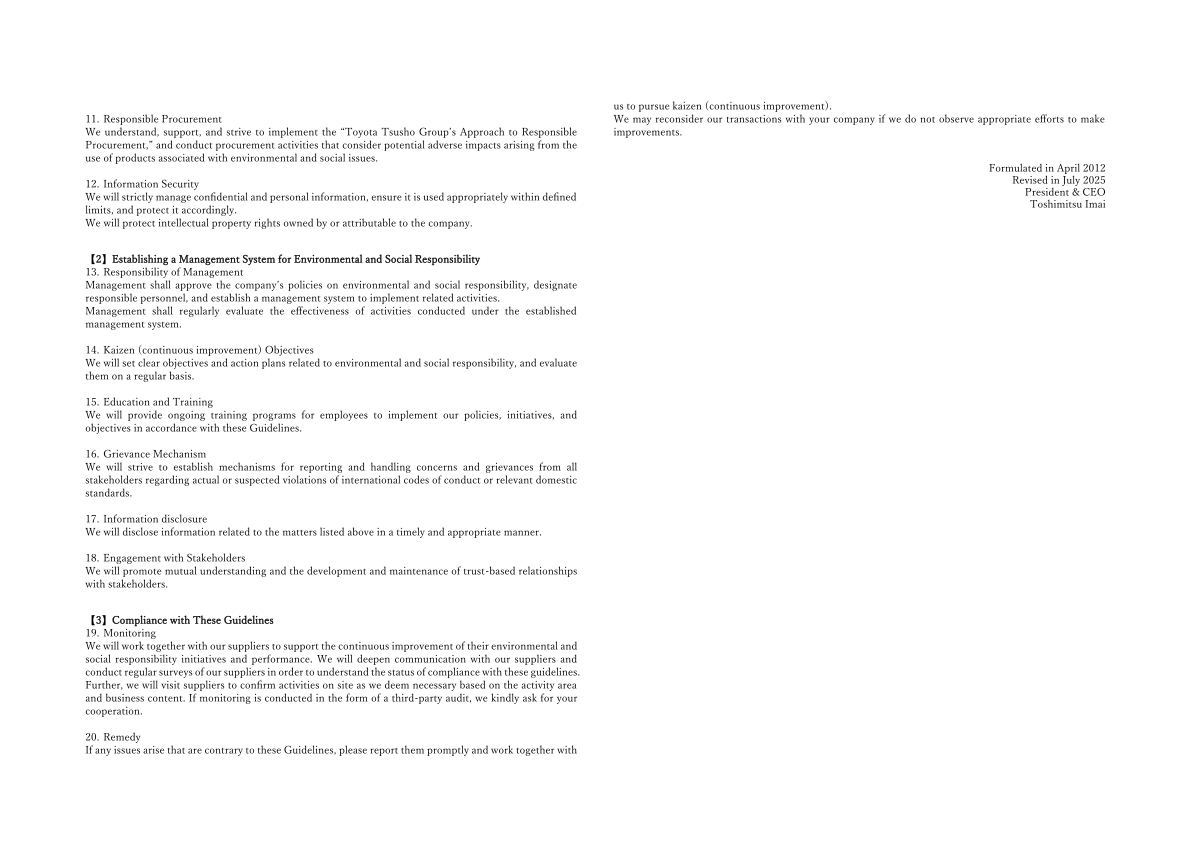
The Toyota Tsusho Group has formulated the Supply Chain Sustainability Behavioral Guidelines, disseminates the guidelines to suppliers, and asks them to put the guidelines into practice. We have also established our "Approach to Responsible Procurement," under which we conduct procurement with consideration for negative impacts on the environment and society, while strengthening supply chain management. In addition, these policies, including the Supply Chain Sustainability Behavioral Guidelines and the Approach to Responsible Procurement, are regularly reviewed and updated in line with changes in the business environment and market expansion. Based on these policies, we strive to assess risks and identify issues through due diligence, and if issues are identified, we work to make improvements through dialogue with suppliers.
Going forward, we will make efforts to build a sustainable supply chain that takes human rights, labor environments, and the natural environment into consideration together with our suppliers.
Our Toyota Tsusho Group mission declares: “Passing on a better Earth to the children of the future,” and we are committed to addressing social issues through business activities.
This document has been formulated to guide our procurement activities with the aim of fulfilling our corporate social responsibility related to our business and realizing a sustainable supply chain, by considering the potential negative impacts of using products associated with environmental and social concerns.
We are committed to implementing the following initiatives and expect our business partners, including suppliers, to understand and act upon them. Through such collaboration, we aim to build a sustainable supply chain.
This policy applies to Toyota Tsusho Corporation and our consolidated subsidiaries.
We also expect our business partners, including suppliers, to understand and comply with this policy.
The Toyota Tsusho Group identifies products that are associated with environmental and social concerns in accordance with the laws and regulations of each country and region, as well as international norms.
For suppliers that handle such products, we conduct questionnaire-based surveys and on-site audits by third-party experts to help identify relevant issues. If any issues are found, we will take steps to prevent or mitigate them.
We strive to disclose information regarding the implementation of initiatives based on this document in a timely and appropriate manner.
The above content was reported at the Toyota Tsusho Corporation Board of Directors meeting on July 31, 2025.
Progress on the implementation of this document is reviewed by the Sustainability Committee, and reports are submitted to the Board of Directors meeting as necessary.
This policy will be reviewed periodically in consideration of external trends and revised as necessary.
Formulated in July 2025
Antimony, Aluminum/Bauxite, Beryllium, Bismuth, Cobalt, Copper, Gallium, Indium, Germanium, Scandium, Neodymium, Praseodymium, Terbium, Dysprosium, Gadolinium, Samarium, Cerium, Yttrium, Lanthanum, Promethium, Europium, Holmium, Erbium, Thulium, Ytterbium, Lutetium, Lithium, Magnesium, Manganese, Natural graphite, Nickel, Niobium, Platinum, Titanium, Vanadium, Tantalum, Tungsten, Gold, Tin, Chromium, Molybdenum, Mica, Zinc, Lead, Rhodium, Ruthenium, Silver, Iron/Steel, Palladium, Soy, Cacao, Coffee beans, Beef, Wood, Glass, Plastic, Leather, Natural rubber, Palm oil
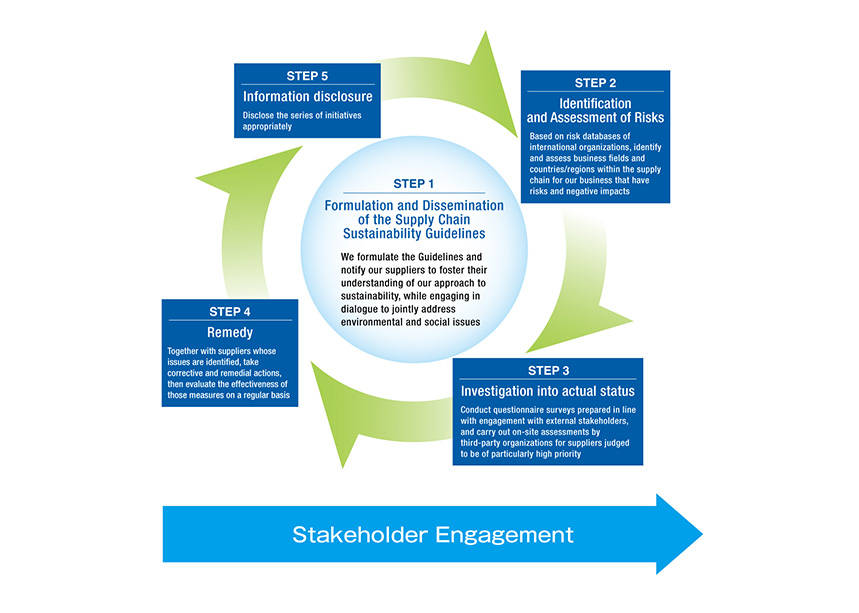
In 2012, Toyota Tsusho formulated the Supply Chain CSR Behavioral Guidelines to foster a common understanding of sustainability, coordinate CSR initiatives, and realize mutual sustainable growth with suppliers. These guidelines were revised in 2019 and 2022 to clarify the common understanding we have with our suppliers in response to the increased awareness of human rights and environmental issues.
These guidelines were revised in 2019 to clarify the common understanding we have with our suppliers in response to increased awareness of human rights and environmental issues. In 2022, the name was changed to the "Supply Chain Sustainability Behavioral Guidelines."
In the 2025 revision, we reflected the issues identified through the supplier human rights due diligence initiated in fiscal year 2023 and, with reference to the RBA* Code of Conduct, stipulated the establishment of management systems by suppliers' senior management.
Since 2022, in line with the revisions to these guidelines, we once again communicated them to approximately 6,000 suppliers of Toyota Tsusho and our domestic and overseas consolidated subsidiaries, requesting their implementation. In cases where there are breaches of the guidelines, we strive to understand the present conditions and causes, provide corrective advice and solutions, and will continue to request suppliers' understanding and compliance.
The content of these guidelines is reported to the Board of Directors meeting, and we will continue to update them as appropriate in response to changes in the external environment.
For new investment and loan projects, we investigate the impact that the business will have on the environment and social.
Since July 2024, we have been operating a system to identify and assess sustainability risks of business partners at the start of new transactions, and, when necessary, conduct questionnaires and on-site surveys. Based on data from international organizations, we prepare country- and product-specific risk scores, and by evaluating the risks according to the partner's country of operation and the products handled, we carry out supplier screening.
In June 2022, we added a sustainability clause to the template of our Basic Sale and Purchase Agreement. We require our business partners including suppliers to comply with our Supply Chain Sustainability Behavioral Guidelines, as well as our Human Rights Policy and Environmental Policy referenced therein. In addition, we seek to confirm that suppliers’ business practices are aligned with our guidelines. We are promoting the use of this clause in contracts and review it as necessary. In cases where suppliers breach the sustainability clause, we strive to understand the present conditions and causes and request corrective action. The clause also stipulates that if a violation of these requirements is identified and, despite our request for corrective action, a material violation continues without remediation within a specified period designated by us, we may consider terminating the contract.
Referring to the United Nations' Guiding Principles on Business and Human Rights, we are conducting human rights due diligence covering the supply chain based on the opinions of internal and external experts. We conduct risk assessments in the supply chain, and for suppliers in high-risk fields and regions, we carry out questionnaires and on-site surveys by third-party specialized organizations to identify, avoid, prevent, and mitigate adverse impacts on human rights.
Based on input from both internal and external experts, we conduct risk assessments using two dimensions: country (where suppliers operate) and the types of products and materials handled. In conducting these assessments, we consider business relationships, including transaction volume with suppliers and our purchasing share, and analyze priority issues within our business by referencing human rights and governance risk data published by international organizations such as the International Labour Organization (ILO) and the United Nations Development Programme (UNDP), covering areas such as forced labor, child labor, and anti-corruption.
In fiscal year 2023 (ended March 2024), we assessed 5,946 Tier 1 suppliers across our group and identified 251 high-risk suppliers. We define these 251 suppliers as our significant suppliers from an ESG risk perspective.
This assessment is conducted on an ongoing basis. As of August 2026, we are in the process of reassessing risks across our global Tier 1 supplier base.
We conduct our own sustainability questionnaire for 251 significant suppliers identified as having elevated human rights and compliance risks. The questionnaire covers sustainability-related policies and initiatives, as well as the extent to which suppliers engage with their own suppliers through sustainability-related questionnaires, dialogue, and other engagement activities.
By the end of fiscal year 2025 (ended March 2026), we had completed on-site assessments of 34 suppliers. To ensure both objectivity and expertise, these assessments are conducted by independent third-party organizations with specialized knowledge that have been accredited by recognized standards-setting bodies. The assessment criteria are based on the Code of Conduct of the Responsible Business Alliance (RBA), an international non-profit organization dedicated to advancing corporate social responsibility in global supply chains. The assessment framework was developed with input from external experts and is designed to evaluate both the management systems and actual practices that support the human rights issues we consider most material.
| 1. Forced labor | 6. Working hours |
| 2. Child labor | 7. Suitable remuneration |
| 3. Safe and healthy working environment | 8. Anti-corruption |
| 4. Freedom of association | 9. Establishment of whistleblowing hotline and protection of whistleblowers |
| 5. Prohibition of discrimination and harassment | 10. Supplier engagement |
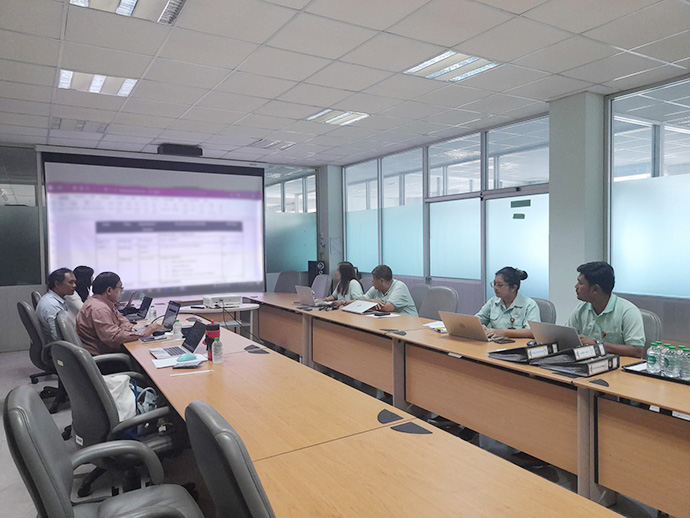
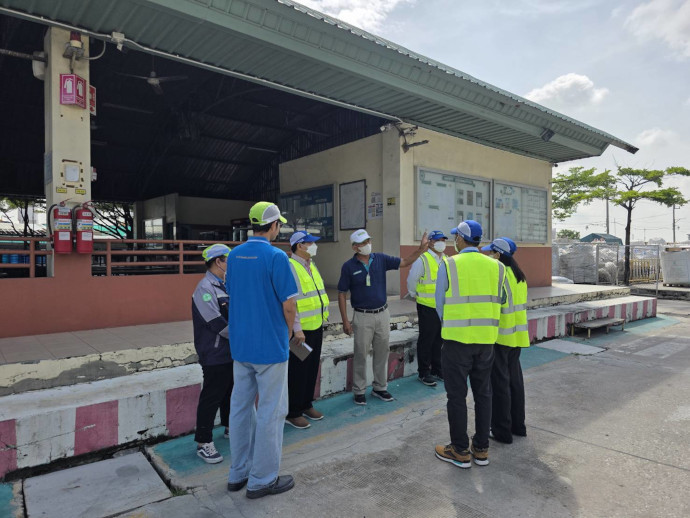
By the end of fiscal year 2025 (ended March 2026), we had completed on-site assessments of 34 suppliers. While no severe human rights violations posing an immediate threat to life were identified, a range of human rights-related issues were identified at 31 suppliers.
We request suppliers to develop corrective action plans and implement corrective measures and response actions within a specified period designated by us. We also support suppliers in their improvement efforts through collaborative engagement, including sharing our policies and examples of effective sustainability practices, to promote continuous improvement.
| Category | Examples of issues | Improvement status |
|---|---|---|
| Young labor | •Internship participants engaged in overtime work or night shifts | Overtime work and night shifts have been prohibited for new internship participants on a phased basis. |
| Wages | •No premium allowances were paid for late-night or holiday work | Internal regulations have been revised to ensure that overtime premiums, holiday work allowances, and other legally required payments are provided in accordance with applicable laws and regulations. |
| Working hours | •Total weekly working hours exceeded the statutory limit | Compliance with legally prescribed weekly working hour limits has been reinforced. |
| Occupational health and safety | •No fire alarms or fire extinguishers were installed | Fire alarms, fire extinguishers, and other safety equipment have been properly installed in accordance with safety requirements. |
| Business ethics | •No training was conducted on the prevention of corruption and bribery | Training programs have been introduced, with responsible personnel assigned as necessary. |
Through our Group-wide supply chain human rights due diligence program, which has been conducted since fiscal year 2023 (ended March 2024), we have identified a number of human rights risks across multiple suppliers. To help prevent, mitigate, and address these risks, we incorporated the identified issues into our Supply Chain Sustainability Guidelines in July 2025.
Beginning in January 2026, we communicated these Guidelines to Tier 1 suppliers of Toyota Tsusho Corporation and its domestic and overseas consolidated subsidiaries, requesting their understanding and implementation. At the same time, we launched a new round of supplier risk assessments (screening) covering environmental, human rights, and governance risks.
We will continue to strengthen our human rights due diligence efforts and promote continuous improvement across our supply chain, thereby contributing to the development of a more sustainable and responsible supply chain.
Similar to human rights due diligence, we have also started initiatives for environmental due diligence targeting our supply chain.
In the fiscal year ending March 2024, to raise awareness of our environmental approach, we held briefing sessions on our environmental policy for key suppliers in our main businesses.
In fiscal year 2024 (ended March 2025), we began designing an environmental risk assessment framework for suppliers and evaluating appropriate response measures for high-risk suppliers.
As of August 2026, we are conducting environmental risk assessments of Tier 1 suppliers of Toyota Tsusho Corporation and its domestic and overseas consolidated subsidiaries and are in the process of identifying high-risk suppliers. Going forward, we will continue to strengthen our supply chain environmental due diligence through supplier questionnaires, on-site assessments, and other engagement activities, with the aim of promoting continuous improvement across our supply chain.
In 2022, a university report raised allegations that Toyota Tsusho had been handling steel products from Baowu Group Xinjiang Bayi Iron & Steel Co., Ltd., where forced labor was suspected in the Xinjiang region of China. In response to this report, we conducted a supply chain investigation, which confirmed that there were no direct or indirect transactions with the company concerned. We will continue to promote responsible procurement that takes human rights and environmental issues into account throughout the entire supply chain.
As a grievance mechanism (a system for receiving complaints and implementing appropriate corrective and remedial actions), Toyota Tsusho is a full member of the Japan Center for Engagement and Remedy on Business and Human Rights (JaCER), a general incorporated association that provides a "Dialogue and Remedy Platform" in accordance with the United Nations Guiding Principles on Business and Human Rights. Through this membership, we provide remedies to individuals and local communities affected by sustainability-related issues, including human rights and environmental concerns.
The grievance mechanism is available to all stakeholders-both internal and external-including employees of the Toyota Tsusho Group, customers and suppliers. Reports of actual or suspected violations of international codes of conduct, national regulations, or other standards related to sustainability-including human rights and environmental issues-can be submitted 24 hours a day, 365 days a year via the complaint form on JaCER's official website.
Upon receiving a report, Toyota Tsusho conducts an investigation, and if it is determined that our business activities have caused or contributed to adverse impacts, we will take corrective and remedial actions through appropriate procedures and dialogue.
By accepting complaints through a third-party channel, we aim to ensure fairness and transparency in the grievance process, promote dialogue and remedy more effectively than before, and address fundamental human rights issues. The reporting system also guarantees the anonymity of the whistleblower and the confidentiality of the report.
Periodic updates of information in response to the report through JaCER, including the nature of the report and its status, will be disclosed on the website of JaCER while ensuring the anonymity of whistleblowers.
Establishment of an Inquiry Page for Sustainability We have established a system to accept opinions and requests from suppliers through an inquiry page on our website. The opinions and requests we receive are shared with the relevant departments within the company through a specialized organization and are linked to initiatives aimed at solving issues.
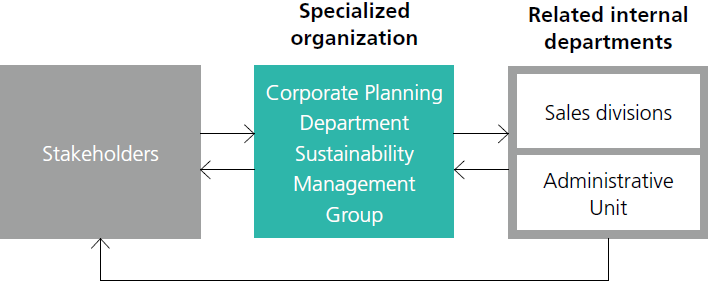
We conduct training programs, including e-learning, for all employees to raise awareness about building a sustainable supply chain.
| 2019 | To raise employee awareness of environmental and human rights considerations throughout the supply chain, we implemented company-wide e-learning on supply chain management. More than 3,000 employees from the standalone entity completed the training. |
|---|---|
| 2020 | We conducted company-wide e-learning on overall sustainability, including our Human Rights Policy and content related to respect for human rights. Approximately 3,100 employees from the standalone entity completed the training. |
| 2021 | We held a briefing session for sustainability representatives of overseas consolidated subsidiaries on our sustainability initiatives and supply chain management, and conducted a study session on human rights for certain consolidated subsidiaries. |
| 2022 | We will continue these initiatives. |
| 2023 | To advance human rights due diligence across the supply chain, we implemented company-wide e-learning on human rights due diligence. Approximately 3,100 employees from the standalone entity completed the training. |
| 2024 | We implemented company-wide e-learning covering an overview of our supply chain human rights due diligence initiatives and case studies of human rights violations that occurred at companies closely related to our business. Approximately 3,800 employees from the standalone entity completed the training. In addition, the previous year’s human rights due diligence training was rolled out to all domestic affiliates and overseas consolidated subsidiaries. Furthermore, we have provided human rights e-learning to employees newly assigned to work abroad. |
| 2025 | Following the revision of our Human Rights Policy, we updated our e-learning materials to reflect our approach to and initiatives on a broad range of human rights issues, including those within our supply chain. 1,357 employees completed the training during the annual Compliance Month held in October, an increase of 298% year on year. We also continued to provide training for domestic affiliated companies, overseas consolidated subsidiaries, and expatriate employees, as in the previous year. |
Regarding training for suppliers, the Sustainability management group of the Corporate Planning department provides training to sales representatives on social and environmental issues. Based on this, sales representatives are progressively conducting study sessions for suppliers identified as having high environmental and social risks, covering our Supply Chain Sustainability Behavioral Guidelines and Environmental Policy. (Ideally, these sessions would be followed by internal training for supplier employees.)
In particular, for safety promotion, the Safety and Environmental Promotion Department offers access to the “ Practical Safety Workshop” located within our group company, Toyota Steel Center Co., Ltd. This facility is available not only to employees of our group companies but also to supplier employees, as part of our efforts to eliminate occupational accidents across the entire supply chain.
Regarding compliance, we independently developed training materials focused on four compliance themes highlighted in our Supply Chain Sustainability Behavioral Guidelines: “Compliance with Laws and International Rules,” “Fair Trade and Anti-Corruption,” “Information Security and Privacy,” and “Intellectual Property.” These materials explain definitions, examples of risks, past cases and their impacts, and measures to prevent and mitigate such risks. We provide this to our suppliers so that it can be utilized for compliance training within each company.
Toyota Tsusho conducts supply chain investigations of covered minerals by tracing them back to the smelter level. In addition, we work to enhance supply chain transparency through engagement with our suppliers and respond to customer requirements and expectations regarding responsible mineral sourcing.
Nova Agri (Brazil), our group company engaged in grain originations and infrastructure business, is committed to sustainable grain procurement.
To ensure sustainability throughout its supply chain, the company uses remote sensing technology and geographic information systems to monitor the farmland where the grain it collects is produced, and carefully selects suppliers by matching its own database of farmers with information on environmental violations published by government agencies and other organizations.
2BSvs certification is the European standard certification for sustainable biomass and biofuels.
NovaAgri obtained 2BSvs certification in May 2022 and started sales of its grain as grain produced and collected in an environmentally friendly manner.
The main conditions for certification and control items are as follows
RTRS is an international initiative that includes certification for responsible soybean production and distribution.
NovaAgri is certified to deliver the values of RTRS throughout the supply chain and supports activities related to RTRS.
We joined the Roundtable on Sustainable Palm Oil (RSPO) in May 2015. We are promoting the procurement of sustainable palm oil with consideration for environmental impacts by participating in meetings and briefings.
We are working to supply uniforms made of Fairtrade certified cotton as a trade system to improve the lives of producers and workers in developing countries and help them become self-reliant.
In 2018, we became the first company in Japan to adopt Fairtrade certified cotton for our corporate uniforms.
By adopting Fairtrade certified cotton, we aim to improve the working environment and the lives of the people working in the production areas of our supply chain.

Toyota Tsusho has also established “COTTON ∞ (cotton eight)” to raise awareness and expand the use of Fairtrade certified cotton.
COTTON ∞ is Toyota Tsusho's trademarked original brand that uses at least 8% Fairtrade certified cotton in its yarns.
By making it easier to introduce Fairtrade certified cotton into products, we are gradually increasing the amount of Fairtrade cotton used and promoting the use of Fairtrade cotton in daily life and society.
Through this initiative, we supply not only uniforms but also general apparel, towels, and other products.
