We define "risk" as "an event with the potential to cause unexpected losses in business operations, or cause damage to the Toyota Tsusho Group's assets and trust, etc." as laid out in the company's Risk Management Basic Policy. The company's fundamental approach is to identify and consider the various risks that occur in the course of business operations, ensure management safety, and increase corporate value by exposing itself to risk only within an appropriate and controlled range.
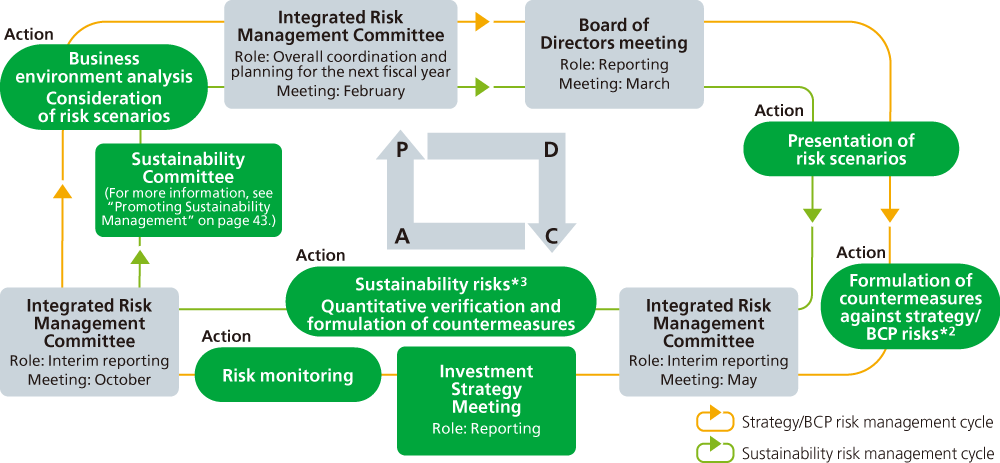
Referencing the COSO*1 ERM Framework, we launched an Integrated Risk Management Committee (chaired by the CFO and consisting of regional CFOs, the general manager of the planning department of each sales division, and the executives and general managers in charge of respective risks, among others) in April 2020 as a structure for putting the Risk Management Basic Policy into practice and promoting global risk management. Each sales division (business division) identifies and assesses the risks associated with its operations and is responsible for managing those risks in its day-to-day operations (including implementing and monitoring response measures), in accordance with internal rules. The Administrative Unit reviews the risk management status of the sales divisions of Group companies in Japan and overseas and reports to the Integrated Risk Management Committee (three times a year).
The committee clarifies risks that could impact the Toyota Tsusho Group’s management, identifies important risks, discusses and decides on response policies, verifies the effectiveness of the risk management process, and reports to the president & CEO. The committee also makes proposals to the Board of Directors meeting, which supervises the risk management process based on such proposals and takes appropriate action if necessary. The committee advances risk management through four activities: Check10, Compliance Review, strategy/BCP, and sustainability.
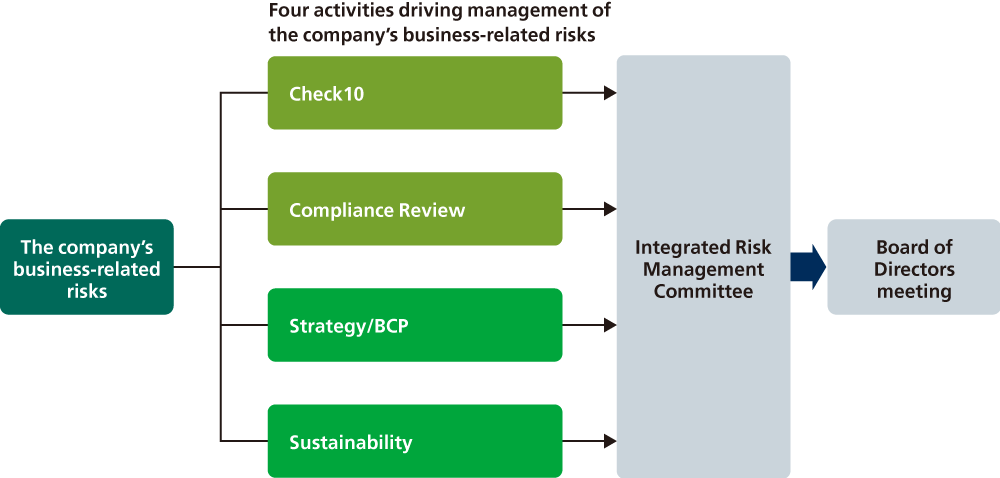
| Check10 | Check10 is an improvement activity implemented based on the findings of each subsidiary’s self-assessment and its regional headquarters’ review for the 10 items identified as risks that should be given the highest priority. Check10 aims to implement improvement measures by conducting assessments for each risk item and visualizing the risk management status. |
|---|---|
| Compliance Review | Compliance Review is an activity based on the idea of “beginning everything we do with safety and compliance,” which is shared across the entire Toyota Tsusho Group. All of Toyota Tsusho’s departments, domestic and overseas sites, and group companies conduct self-inspections to confirm the acquisition status of licenses, permits, registrations, etc. necessary for their operations, as well as compliance with quality and certification standards based on laws and regulations. The process and results of such inspections are then subject to on-site, hands-on verification by executives responsible for the relevant divisions. |
| Strategy/BCP | Analyzing macro-risks and BCP risks that affect strategy is becoming increasingly important as uncertainty associated with changes in the external environment is growing, thereby having a greater impact on our business. Based on external environment (PEST) analysis, we consider the risks and opportunities for our business presented by changes in the external environment and implement measures for each scenario. |
| Sustainability | Given the growing impact of sustainability-related risks and opportunities on the Company, we are strengthening our analysis and response measures. |
As described above, we classify highly important and urgent risks that exist in carrying out Toyota Tsusho Group business according to their factors, and appropriately implement the process of building an internal management system that suits their respective characteristics and reporting to the Integrated Risk Management Committee.
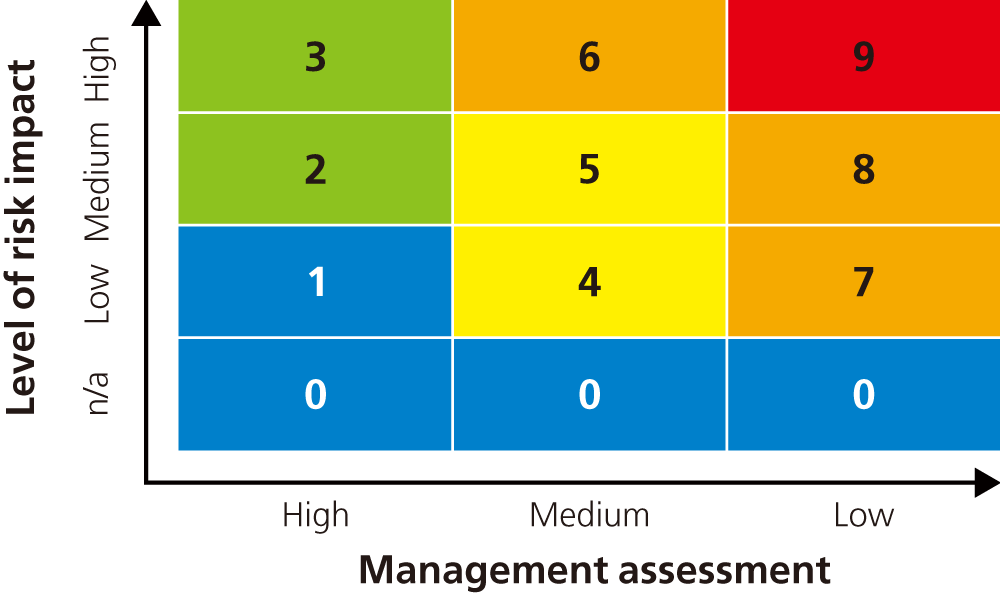
We have selected 10 risk items (product, credit, business, finance, internal control, human resources and labor, information security, misconduct, logistics, and occupational safety and environment) as risks to be given the highest priority and assessed and scored them for each business entity on a two-axis matrix of risk and management systems. We then created a heat map to visualize both quantitative and qualitative risks. In our annual Check10 activities, each risk specialist department conducts an assessment and review of the self-inspection results from each subsidiary to improve the accuracy of inspections and provide support to companies. To identify global risks and problems, and then work to eliminate and minimize them, we discuss and promote necessary countermeasures to strengthen our risk management system on a consolidated basis. We are also attentive to the risks around us and conduct training on appropriate management in the form of face-to-face training, online training, e-learning, and the like.
| Risk items | Risk details | Risk Supervisory department |
|---|---|---|
| (1) Product | Long-age inventory, product positions | Business Accounting Department, Investment and Credit Department |
| (2) Credit | Overdue account receivable, low-rated transaction counter party | Investment and Credit Department |
| (3) Business | Downturn in performance, low profit | Investment and Credit Department |
| (4) Finance | Foreign exchange positions, fund procurement, countermeasures against BEC and cash flow management, prevention of remittance fraud | Finance Department |
| (5) Internal control | Reduced risk of improper conduct | Audit Department |
| (6) Human resources and labor | Labor disputes and human rights violations | Global Human Resources Department |
| (7) Information security | Fulfillment of All Toyota Security Guideline, key cybersecurity measures | DX Acceleration Department |
| (8) Misconduct | Prevention of cartels and rigging | Legal Department |
| Prevention of bribery, education for misconduct prevention | Compliance & Crisis Management Department | |
| (9) Logistics | Logistics compliance | Global Logistics Management Department |
| (10) Occupational safety and environment | Industrial accidents, fires and explosions, environmental management | Global Safety & Environmental Promotion Department |
We engage in risk asset management (RAM), in which Risk Asset (RA) are calculated by multiplying risk exposure (RA principal) on a consolidated basis by risk weight (RW)—the maximum expected loss ratio based on credit rating and country risk—and balancing it with risk buffer (RB) based on financial corporate strength. Our basic RAM policy is to maintain a ratio of RA to RB below 1.0. To achieve this, we simulate the ratio of RA to RB based on the investment pipeline and other factors to achieve both investment in growth and financial soundness. For exposure in emerging countries with relatively higher country risk, we hedge risks through insurance by Nippon Export and Investment Insurance (NEXI) among other measures. We also manage country risk by setting country-specific maximum limits based on RB to prevent excessive concentration in specific countries. In addition, we conduct Risk-adjusted Value Added (RVA) assessments during transaction screening and investment discussions to raise awareness of the need to secure sufficient return for the risk.
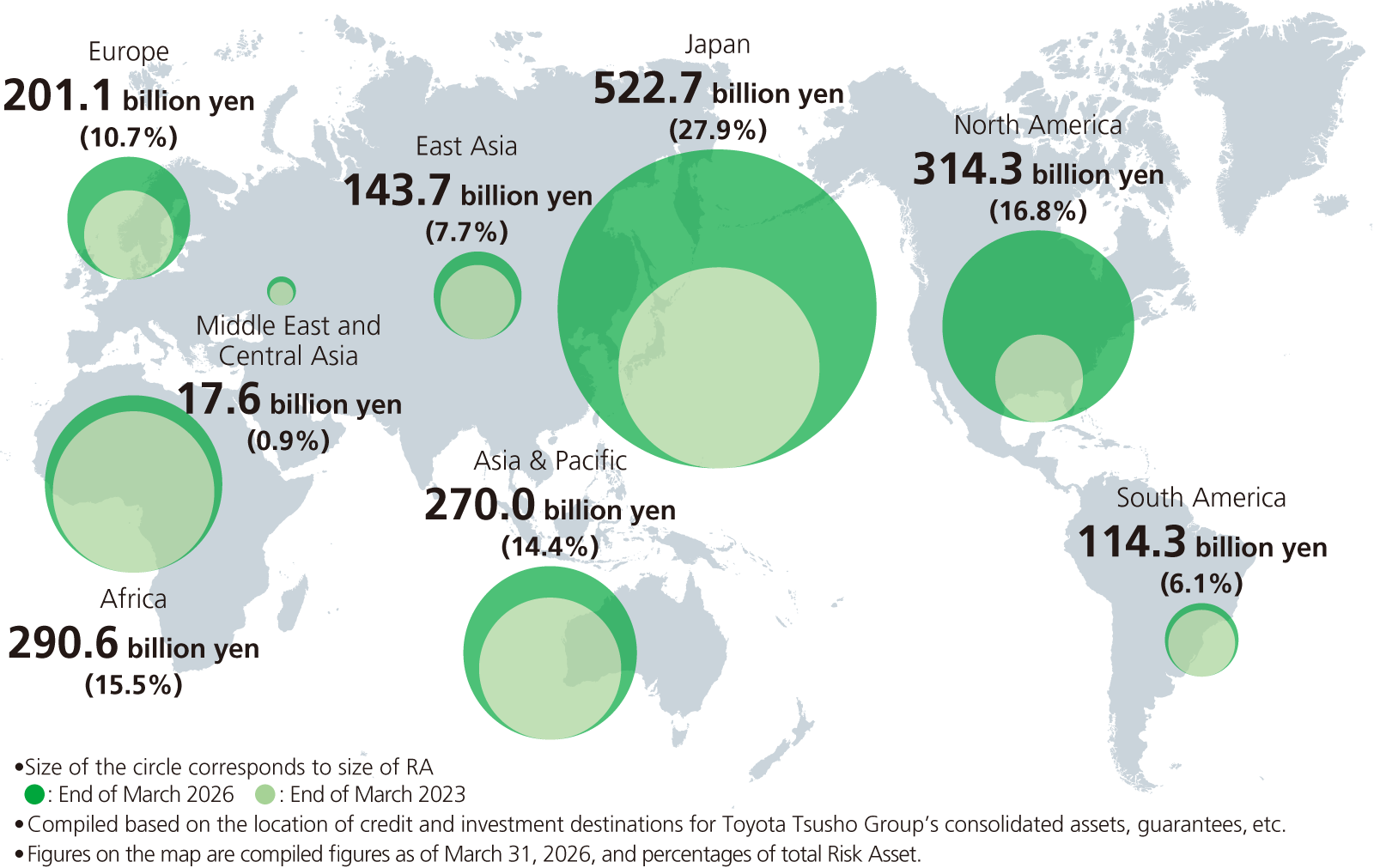
Although RA has increased in each region due to business expansion as well as country risks that materialized in some emerging countries, our RA continue to be well diversified by region. As a result of RA management and the continuous accumulation of RB, the RAM figure for the fiscal year ended March 31, 2026, stood at 0.6. RA was again held within the range of RB (ratio of RA to RB of 0.6, which is below 1.0), and we thus maintained a sound and stable financial structure.
Commodities handled by the Toyota Tsusho group in its businesses, such as non-ferrous metals, rare earth resources, foods, and textiles, are vulnerable to uncertainties arising from price fluctuations. To address this, the Group sets position limits for each commodity and regularly monitors the status of operations within these limits. While the group takes various measures to reduce such price variation risks, it may not be possible to completely avoid them, so the state of commodity markets and market price movements may affect the operating results and financial condition of the group.
The Toyota Tsusho group faces a degree of risk arising from the collection of loans and receivables associated with commercial transactions with its domestic and overseas business partners. To address these credit risks, the group sets bond limits and contract limits for each type of transaction, such as accounts receivables and advances, and uses a company-wide system to understand group credit risks. We also set ratings (eight levels) using our own standards based on the financial status of business partners and regularly confirm the status of business partners. In the case of business partners with low ratings, the group reviews the transaction conditions, determines the transaction policy, such as the protection of accounts receivables or withdrawal, carries out individually focused management, and endeavors to prevent losses. While the group manages credit in this way, it is difficult to entirely avoid the risk of deterioration of the financial condition of business partners or risks arising from the occurrence of unforeseen events, and the group’s operating results and financial condition could be adversely affected if it becomes difficult to collect receivables due to bankruptcy of business partners or other circumstances.
We aim to expand existing businesses, strengthen functions, and enter new businesses by strengthening existing partnerships and forming new alliances. The Group’s investment approach is not based on the pursuit of short-term profit, but rather strategic investment that will lead to the development of business and the expansion and reinforcement of the Group’s value chain over the medium to long term. To better focus management resources on businesses where the Company can demonstrate its unique strengths, sales division policies and the investment pipeline are discussed at the Mid-term Business Plan Meeting based on company-wide policies, and the strategic value and priority of investments exceeding a certain amount are discussed at the Investment Strategy Meeting to determine whether they should be pursued. In the process of reviewing investment projects, the Administrative Unit verifies business plans from a technical perspective. Risk assessments and risk mitigation measures are discussed and opinions provided for each investment project, leading to deliberation by the Investment and Loan Meeting and a final decision by the organization concerned. In addition, to accelerate the investment decision-making process, the Group is proceeding to determine the authorized decision maker based on certain conditions and monetary significance, and to delegate decision-making authority to certain affiliated companies both in Japan and overseas. After investments are implemented, the Administrative Unit and the sales divisions jointly and continuously monitor and support projects facing issues (“check and support”). The Group also monitors investments for signs of declining performance, progress in business plans, exit conditions, and other aspects, and it operates strict restructure and exit rules for projects that are not proceeding as planned.
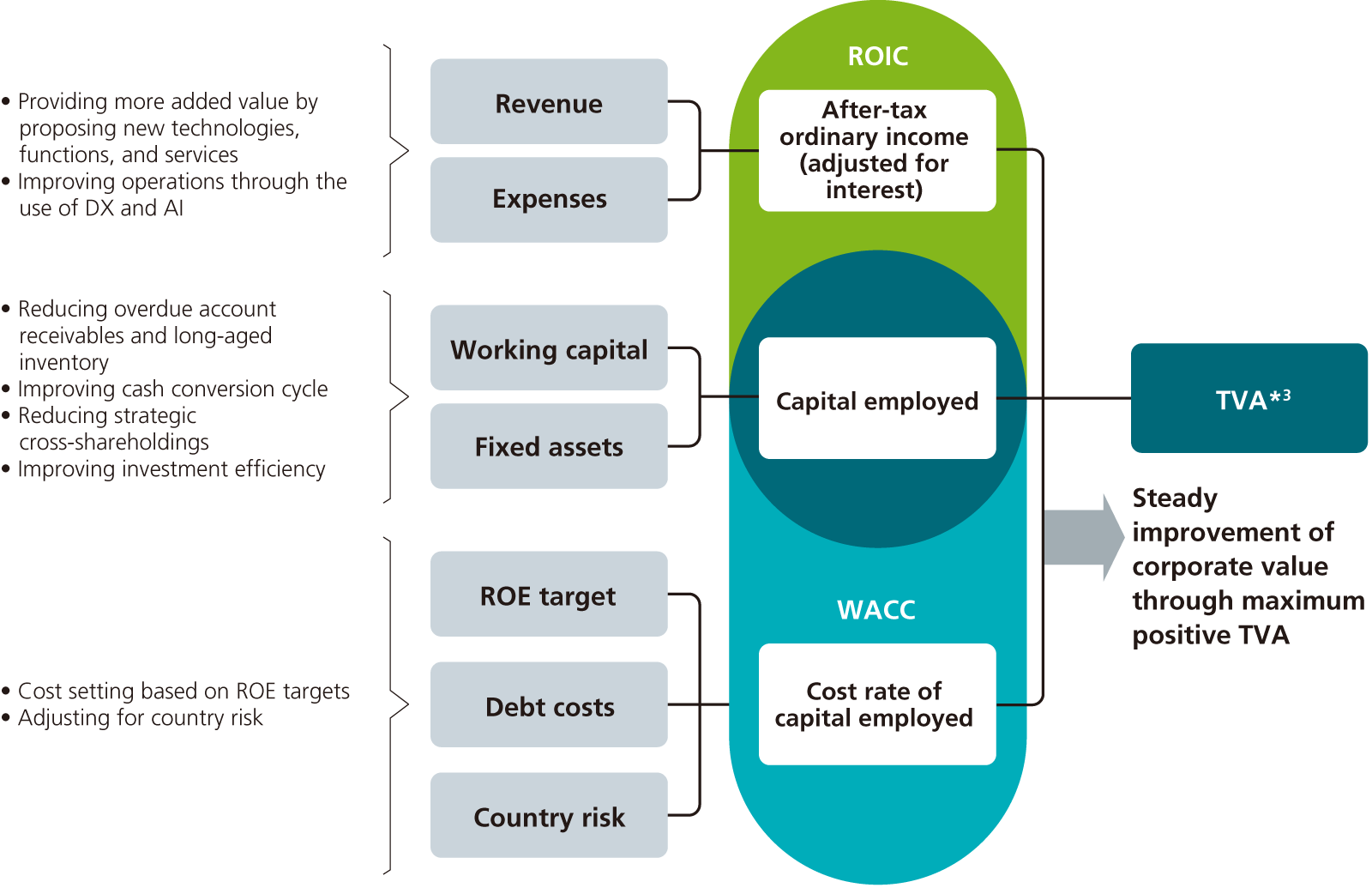
For many years, we used TVA1 (which measures the value added beyond the cost of capital employed) and RVA2 (which measures risk) as quantitative evaluation indicators for investments. While utilizing TVA, which can evaluate the contribution to corporate value, we have adopted ROIC3 as a KPI for deliberating investment projects in order to more strongly emphasize the efficiency of returns generated from invested capital. The cost rate of invested capital, which is in contrast to ROIC, is calculated as the weighted average cost of shareholders’ equity and interest-bearing debt. Setting the cost of shareholders’ equity to reflect the Company’s ROE target is designed such that any increase in ROIC through improved capital efficiency, improved profit margins or sales expansion will lead to achievement of our ROE target. In addition, by adjusting for country risk, we ensure an approach that matches the global nature of our business.
Despite these efforts, if the value of an investment target company or the market value of the stock of such a company declines due to changes in the business environment, technological innovation, or other unforeseeable circumstances, the group may lose all or a substantial portion of the invested balance or the group may have no choice but to provide additional funding to such investment targets. In such cases, there could be adverse impacts on the group’s operating results and financial condition.
Toyota Tsusho implements hedge measures, including using forward exchange contracts, for transactions denominated in foreign currencies, as they are exposed to the risk of fluctuations in foreign exchange rates. In the event we are unable to hedge a transaction, we implement measures that mitigate foreign exchange rate fluctuation risks by setting position limits and regularly monitoring the results of these transactions.
We strive to minimize liquidity risk by maintaining sound business relationships with financial institutions, engaging in asset liability management (ALM), and procuring funds in accordance with the nature of our assets.
We began conducting human rights due diligence at all consolidated subsidiaries in the fiscal year ended March 31, 2022 in order to respond to human rights risks that could have an impact on society through business activities.
Based on the opinions of internal and external experts, we analyzed human rights risks at all consolidated subsidiaries around the world from three perspectives: business natures (business sector), location (country), and products handled. We identified 93 companies where confirmation of priority risks is thoroughly needed. The four salient human rights issues that we investigated during this due diligence process were forced labor, child labor, discrimination, and the freedom of association and right to collective negotiations.
We surveyed the 93 subject companies using a questionnaire to understand the management status of anticipated specific human rights risks. Based on the results of the questionnaire, we identified companies that we believed required further investigation. We then investigated the actual situation through an interview with the presence of third-party organizations and established the direction of specific measures to reduce risks.
No human rights issues of immediate concern were identified through this process, but we will continue our efforts to reduce human rights risks.
The status of this process and the evaluation results are reported to the Sustainability Management Committee.
The CSO is responsible for overseeing information security measures. Based on the Company's Information Security Policy, the CSO implements information security risk management through the following measures and others. Additionally, the CSO participates in the Integrated Risk Management Committee and continuously supervises our company's cybersecurity strategy.
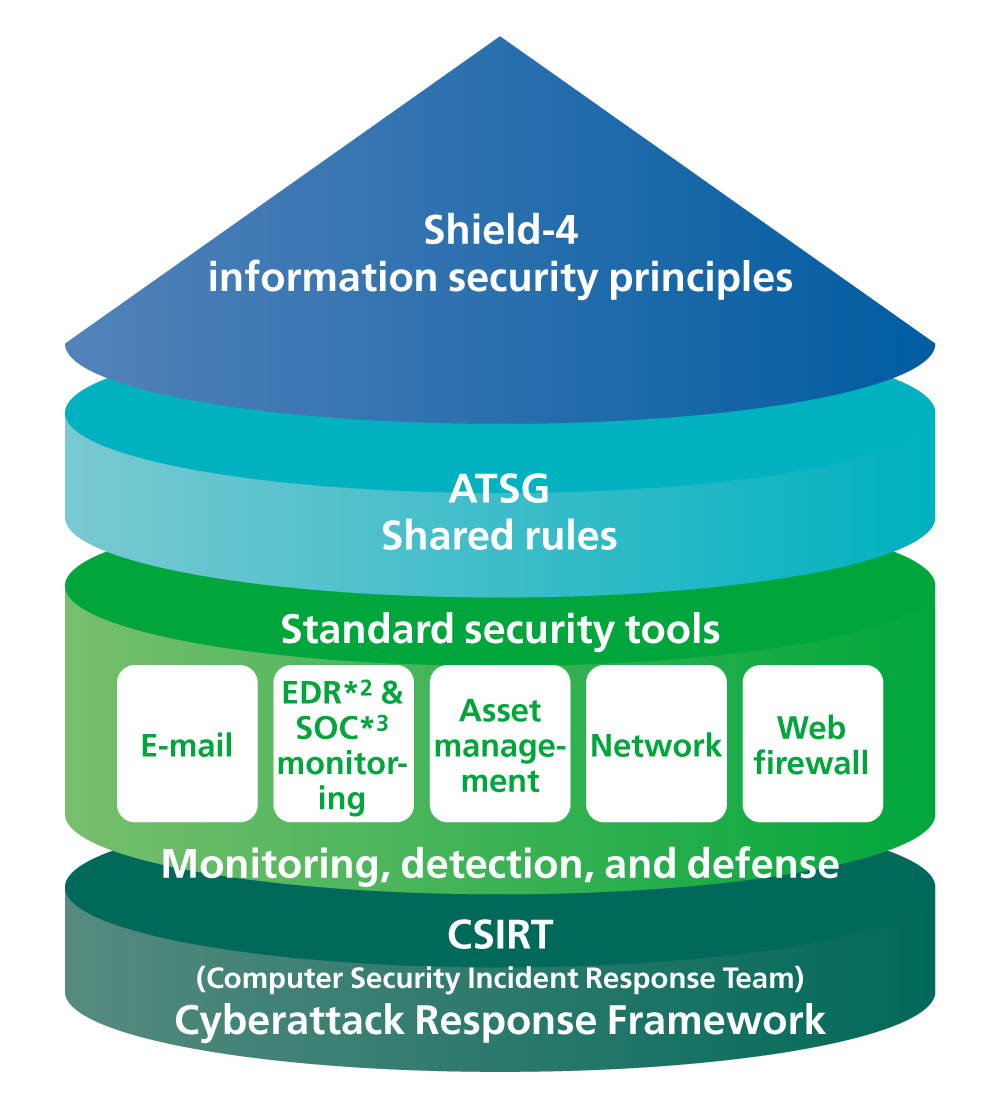
In accordance with the Shield-4 information security rules, the Toyota Tsusho Group has worked to raise employees’ security awareness, introduced standard security tools based on the ATSG*1 rules shared across the Toyota Group, and established a CSIRT cyberattack response framework. Furthermore, to enhance the effectiveness of these measures, we conduct a roaming “caravan” of on-site inspections of Group companies. Through these activities, we regularly monitor the operational status of security measures in the field and the issues that have arisen, and we provide improvement support. In this way, we are working to elevate the cyber-security level of the entire Group and strengthen its governance.
We have established the 'Shield-4' Information Security Principles and conduct awareness-raising activities to ensure that everyone handling our information assets performs their duties with proper information security literacy.
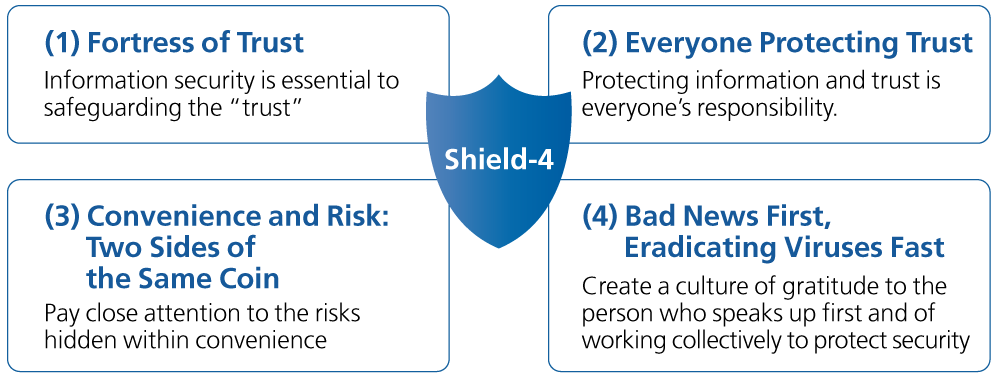
We ensure, through regular security training, that all employees of the Toyota Tsusho Group, including those overseas, who handle our information assets are able to perform their duties with appropriate information security literacy, and we require mandatory and ongoing education and training on cybersecurity to maintain and enhance this capability.
We established the Compliance & Crisis Management Department to strengthen the compliance system of the entire Group. In doing so, we aim to raise awareness of compliance, including thorough compliance with laws and regulations.
We establish management rules or guidelines concerning occupational safety & health and environmental risk and appropriately identify and manage these risks.
The Group's business entities are operated in accordance with Toyota Tsusho Group Environmental Policy. For existing business units, we are working to reduce the risk of environmental pollution by quantitatively evaluating the degree of environmental pollution risk for each facility and the management level of work sites. In addition, we carry out a compliance evaluation for environmental laws and regulations every six months, and double-check the status of legal compliance of priority issues through internal and external audits.
We strive to reduce risks for projects in countries with high country risk through export and investment insurance and other means. We also aim to reduce the concentration of risk in specific regions or countries by monitoring risk-weighted assets, which is the maximum expected loss, for each country and keeping it within an upper limit set for each country.
Artificial intelligence (AI) is bringing significant transformation to society as a whole. We believe that failure to respond appropriately and promptly to these changes may expose us to the risk of falling behind in an increasingly AI-driven world.
At the same time, we recognize the social and ethical risks that AI may pose, including risks related to fairness, transparency, privacy, and security. To address these risks, Toyota Tsusho has established the following AI Policy.
We are committed to ensuring that all directors, officers, and employees understand and comply with this policy and to promoting the development, provision, and use of Responsible AI that earns the trust of our stakeholders.
We comply with applicable laws, regulations, and social norms related to AI in its development, provision, and use.
We recognize that biases may exist in training data and algorithms. We strive to prevent unfair discrimination based on race, gender, nationality, religion, age, disability, or any other protected characteristic in the development, provision, and use of AI.
We seek to understand both the capabilities and limitations of AI and use it appropriately according to its intended purpose. We do not engage in inappropriate use of AI, including the exploitation of vulnerabilities.
When AI is used to support significant decision-making, we ensure appropriate human oversight and maintain mechanisms that allow for intervention, modification, or suspension when necessary.
We strive to ensure transparency regarding AI-generated predictions, judgments, and decisions, and to provide reasonable explanations to stakeholders where appropriate.
We recognize that ultimate responsibility for the outcomes and impacts of AI rests with humans. Our directors, officers, and employees fulfill their respective responsibilities in accordance with their roles and accountabilities.
We appropriately protect personal and confidential information in the development, provision, and use of AI. We also strive to maintain an appropriate level of cybersecurity.
We have established AI guidelines that set out rules, best practices, and precautions for AI use. By communicating these guidelines to all employees, we promote the responsible use of AI in accordance with our AI Policy.
We provide regular AI-related training through e-learning programs for all employees as part of our ethics awareness initiatives. Through these efforts, we promote ethical AI practices and foster a culture of responsible AI use across the organization.
August 2026
Shigeo Obata Chief Strategy Officer (CSO)
In response to a major terrorist attack in Algeria in January 2013, the Security Management Group was established as a specialist organization within the Global Human Resources Department in April of that year. Currently, the Crisis Management & BCM Group of the Compliance & Crisis Management Department conducts education and training includes pre-assignment seminars for employees (and their families) stationed overseas and hands-on training that enables them, in a controlled environment, to learn about and to experience the risks unique to their country or region.
The Toyota Tsusho Group has established a Business Continuity Management (BCM) system led by the Crisis Management & BCM Group of the Compliance & Crisis Management Department.
Toyota Tsusho's Business Continuity Plan (BCP) is an all-hazard BCP that takes into account all risks, including natural disasters such as earthquakes and typhoons, terrorist acts, pandemics, and cyber-attacks, and has been formulated for 230 businesses in Japan and overseas. Specifically, in accordance with the Toyota Tsusho Group Basic Business Continuity Principles, we have prepared plans to prevent business interruption or, to restore operations as quickly as possible even in the event of interruption, assuming scenarios in which key management resources are unavailable, such as employees not being able to come to work, not being able to enter the headquarters, long-term power outages, or not being able to use IT systems. Based on the formulated response plan, we conduct initial disaster response drills in September and March of each year, based on the scenario of a large-scale earthquake. We also conduct educational and awareness-raising activities for our employees worldwide by publishing a collection of case studies of businesses that have formulated BCPs and regularly issuing newsletters in both Japanese and English. Based on the BCP formulated to maintain an appropriate management system, we conduct periodic exercises and improvements, and continue to operate through the PDCA cycle.
TTC Group Business Continuity Principles
There are worldwide concerns that mineral resources mined in the Democratic Republic of the Congo (DRC) and nine neighboring countries are the source of funding for armed groups that are causing human rights abuses and environmental destruction. A survey has been conducted every year since 2013 to check whether these conflict minerals are contained by going back to the supply chain globally, centered on US-listed companies, and we are also actively participating in the survey as a member of the supply chain.
To achieve sustainable growth, we believe it is important to appropriately manage risk and to generate reliable results from investments. Our basic approach to investing is not to target short-term profits but rather to make strategic investments whereby a business is developed over the medium- to long-term, thus leading to the expansion and strengthening of the Toyota Tsusho Group’s value chains. We focus our management resources on businesses in which we can demonstrate Toyota Tsusho’s unique strengths through discussions of sales division policies based on company-wide policies and the formulation of investment pipelines.
Regarding new investment projects, major policy is decided by the Medium-Term Management Plan Meeting and the Investment Strategy Meeting, while decisions on individual projects are made by the organization concerned based upon business plans screened by the Investment and Loan Meeting/Investment and Loan Committee. For investment projects that exceed a threshold level, the strategic value and order of priority of the investment are discussed at the Investment Strategy Meeting to determine whether it should be pursued. At the feasibility study of an investment, the Administrative Unit examines the business plan from an expert perspective and then discusses and provides opinions on risk assessment and mitigation measures. A final investment decision is then made through discussions at the Investment and Loan Meeting and Investment and Loan Committee. For important investment projects, the Administrative Unit and each sales division put in place a collaborative team to resolve issues. Some of our affiliated companies, both in Japan and overseas, have been authorized to make investments in order to accelerate the investment decision-making process.
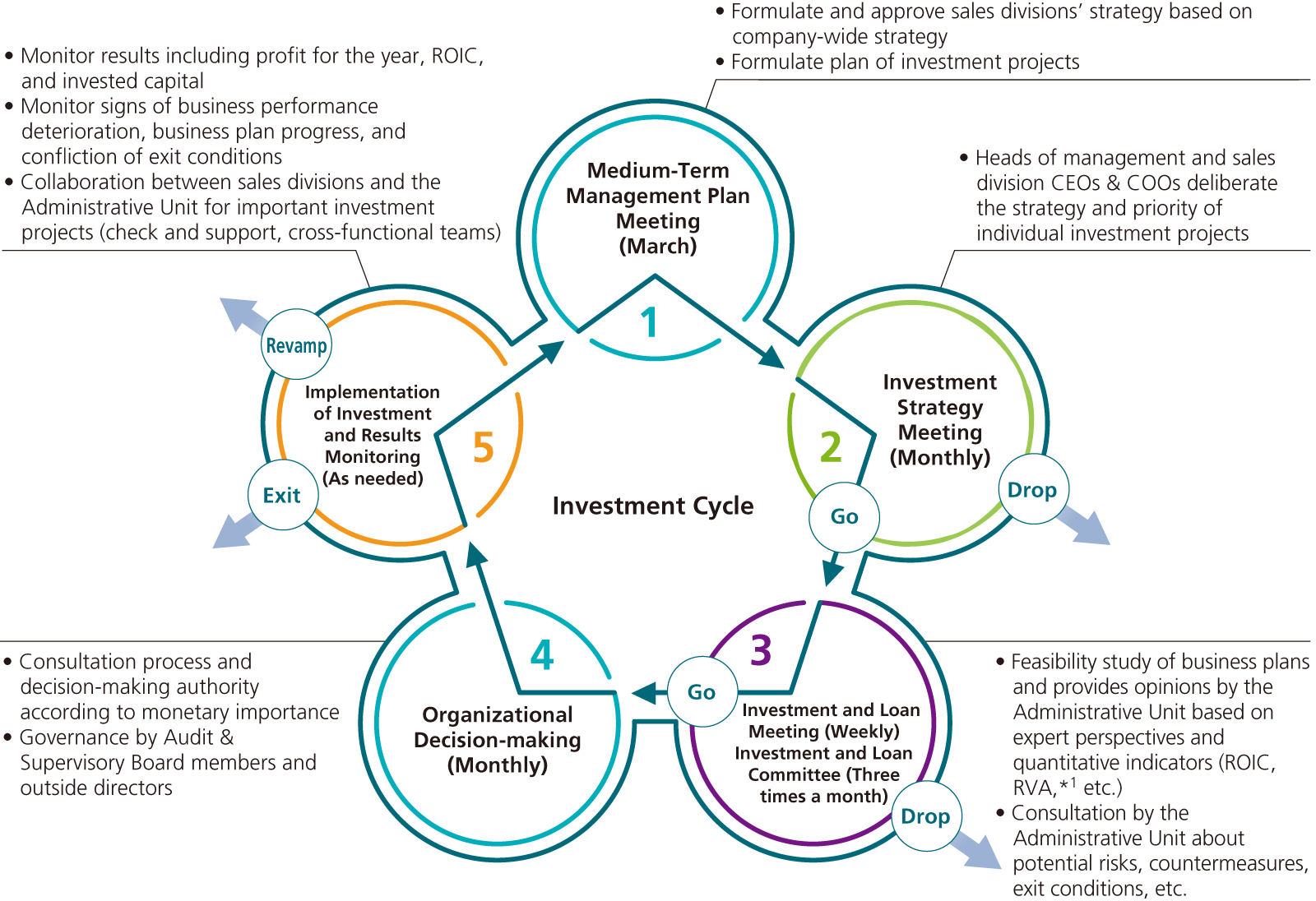
At the Investment and Loan Committee, chaired by the CFO, and in the Investment and Loan Meeting, chaired by the deputy CFO, we manage investment input using ROIC, a management indicator of profitability, and RVA, which is used to verify if the revenue that is secured is commensurate with the amount of risk. Furthermore, we use our own environmental check sheets to quantitatively verify projects from multiple perspectives, including assessments of climate change and other environmental risks, greenhouse gas emissions, and emissions reductions. We have also enriched our systems for investment follow-up, to solve the problems faced by our operating companies and to replace assets. We always closely scrutinize our consolidated balance sheets. In addition to performing day-to-day risk analysis for foreign exchange rates, interest, credit, product market conditions, and the like, we have also established a system for comprehensively checking country risks, including geopolitical risks. This screening is also performed for our new investments, and new investments are investigated closely in advance of Investment and Loan Committee Meetings or Investment and Loan Meetings.
After investments are made, the Administrative Unit and the sales division concerned jointly and continuously monitor and support projects facing issues (“check and support”). In addition to independent monitoring by the sales divisions, the Administrative Unit also monitors through balance sheet and profit/loss (BS/PL)*2 standards. If a project falls short of quantitative standards, we assess the sustainability of the business and decide whether to restructure or exit. By continuing to repeat this investment cycle, we aim to allocate management resources optimally and improve capital efficiency.
We have implemented ROIC as a business management indicator, also using it as a KPI when deliberating on investment projects. This allows us to be keenly aware of the efficiency of return on invested capital. We set quantitative ROIC targets of 15% or more for the Core Value domain, which is focused on the mobility that we have been working on through the years, 10% or more for the Social Value domain, which contributes to taking on social challenges such as resource recycling, and 5% or more for the Nature Value domain, which contributes to global environmental challenges such as renewable energy. We carry out initiatives aimed at improving profitability and capital efficiency.
For optimal allocation of management resources, we have classified our businesses into four quadrants based on their competitiveness and growth expectations, and we are reevaluating these businesses. One example of this is reviewing our business portfolio, securing growth investment funding and shifting to growth businesses by accelerating our efforts to exit non-core businesses and reduce the number of low-profit companies.